
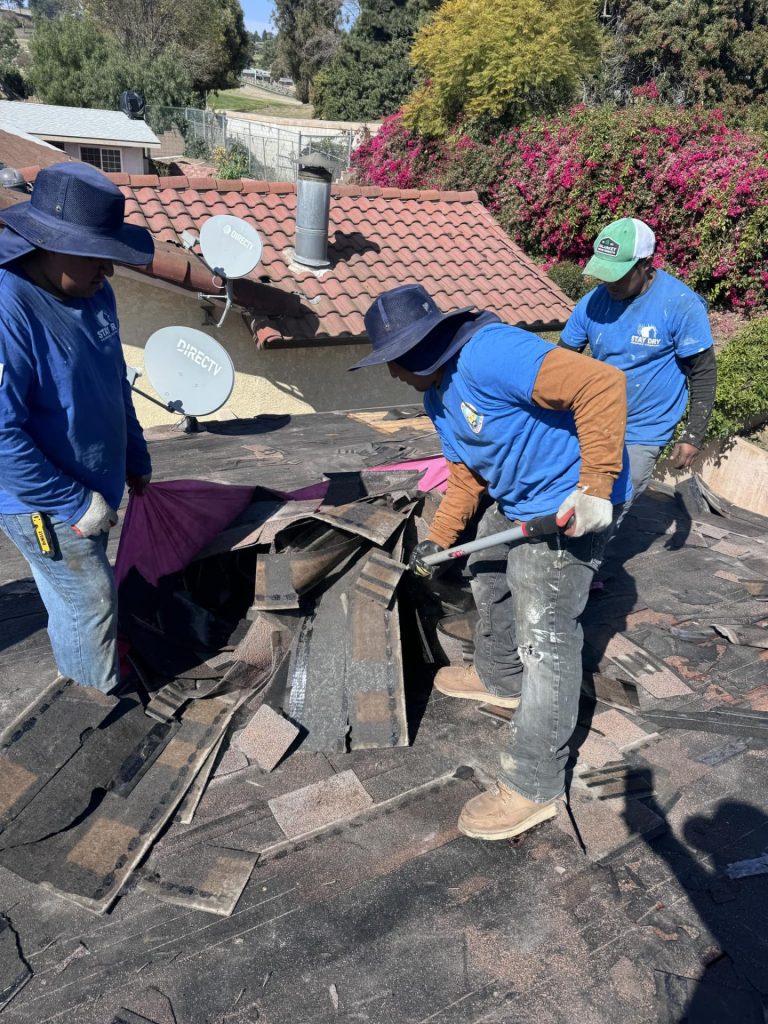
Welcome to Anaheim Roof Repairs (a specialized division of Stay Dry Roofing), your premier local authority for high-precision Roof Leak Repair in Anaheim, California, and the surrounding North Orange County communities.
Discovering an interior water stain on your ceiling or smelling the musty odor of mold in your home is a highly stressful experience. Water intrusion is not just an aesthetic issue; it is a rapid-onset threat to your property’s structural framing, your interior valuables, and your family’s respiratory health. We understand the anxiety that comes with a leaking roof. Our mission is to eliminate that stress through rapid diagnostics, advanced thermal leak detection, and surgical repair techniques that permanently resolve the issue at its true source.
Strategic Service Note: We proudly operate as the dedicated North Orange County diagnostic and leak repair branch of our corporate headquarters, Stay Dry Roofing Mission Viejo. This highly strategic dual-location infrastructure guarantees that you receive the hyper-localized, rapid-response care of a dedicated Anaheim crew, fully empowered by the immense diagnostic technology fleets, premium material sourcing, and established financial stability of South Orange County’s most prestigious roofing enterprise.
The Anatomy of an Anaheim Roof Leak
Anaheim is a vast and dynamic municipality, home to over 343,500 residents according to recent demographic projections from the US Census Bureau. The homes here—from the historic 1920s bungalows in the Anaheim Colony to the sprawling Mediterranean luxury estates in Anaheim Hills—face a unique set of environmental stressors.
A roof leak in Southern California behaves differently than a roof leak in the Pacific Northwest. Understanding the physics of our local climate is the first step in diagnosing interior water damage.
The Drought-to-Deluge Cycle
While Anaheim only averages about 13 to 14 inches of rain annually, meteorological data from the National Weather Service (NWS) confirms that this precipitation usually arrives in highly concentrated, violent “atmospheric rivers” during the winter.
- The Summer Bake: For nine months of the year, your roof bakes under intense UV radiation. The thermal shock of 160-degree afternoon roof deck temperatures causes building materials to expand and contract. This daily movement cracks the protective sealants around your roof valleys and bakes your hidden underlayment until it is brittle.
- The Winter Deluge: Because it does not rain during the summer, these micro-cracks remain completely hidden. When a winter atmospheric river suddenly drops two inches of rain in a 12-hour period, those invisible vulnerabilities are instantly overwhelmed.
Why Leaks Do Not Drop Straight Down
The most frustrating aspect of a roof leak is its deception. If you see a water stain on your living room ceiling, the hole in your roof is almost never directly above that stain.
- Water follows the path of least resistance and gravity.
- A leak might originate near your chimney, penetrate the underlayment, and then travel 15 feet horizontally along a sloping roof rafter before finally dripping onto your ceiling drywall.
- This is why hiring an amateur handyman to simply “caulk the roof directly above the stain” rarely solves the problem. It requires advanced forensic tracking to find the true source.
The Primary Culprits: Roof Valleys and Underlayment Failure
When our diagnostic teams trace interior stains back to their origin on an Anaheim roof, we find that the vast majority of severe leaks are caused by failures in two critical areas: the roof valleys and the waterproof underlayment.
1. Roof Valley Leaks (The Water Highways)
The “valley” of a roof is the V-shaped internal angle where two sloping roof sections intersect. Valleys are the primary drainage highways of your entire roofing system. They funnel thousands of gallons of concentrated water downward into your gutters.
- The Debris Dam: Anaheim is famous for its beautiful, mature urban canopy. However, when leaves, pine needles, and eucalyptus debris blow onto your roof, they naturally settle in the valleys. This organic matter forms a dense “dam.”
- The Intrusion: When heavy rain hits, the water hits the debris dam, backs up, and is forced sideways underneath your shingles or concrete tiles.
- The Repair: We carefully remove the roofing materials surrounding the valley. We strip the rotted wood and install an Ice & Water Shield self-sealing membrane. We then install heavy-gauge, custom-fabricated metal valley flashing (often a “W-valley” profile) that physically prevents water from traveling sideways, perfectly weaving your existing shingles or tiles back into place.
2. Underlayment Failure (The Hidden Shield)
Whether you have architectural shingles in West Anaheim or heavy Spanish clay tiles in Anaheim Hills, the outer material is only the first line of defense. The true waterproofing layer is the underlayment—the barrier installed directly on the wooden roof deck beneath the tiles or shingles.
- The Degradation: In homes built during the 1990s and early 2000s, builders utilized organic asphalt-saturated felt paper. Over decades of enduring the extreme heat of the Anaheim sun, this paper literally crumbles into dust.
- The Intrusion: When wind-driven rain or water from a cracked tile slips past the outer layer, it hits this crumbled paper and flows directly into your attic.
- The Repair: We perform targeted repairs by removing the tiles or shingles in the affected area, cutting out the rotted felt, and replacing it with state-of-the-art, dual-layer synthetic underlayment. This modern material is exponentially more heat-resistant and tear-resistant, permanently stopping the leak.
The Devastating Symptoms: Interior Damage and Mold
Ignoring a roof leak is a catastrophic financial mistake. What begins as a minor drip rapidly evolves into massive interior destruction that can render your home unsafe. If you observe any of the following symptoms, you must initiate a leak repair protocol immediately.
1. Interior Drywall Stains and Bubbling
The earliest sign of a leak is a faint, yellowish-brown discoloration on your ceiling or high up on a wall.
- As the drywall absorbs water, the paint will begin to bubble or peel.
- If you touch the ceiling and it feels soft, or if the bubble is physically bowing downward, the drywall is heavily saturated and is at imminent risk of collapsing under the weight of the pooled water.
2. Ruined Attic Insulation and Title 24 Compliance
Before water ever reaches your ceiling drywall, it must pass through your attic insulation.
- The Damage: When fiberglass or blown-in cellulose insulation gets wet, it instantly loses 100% of its thermal resistance (R-value). It compresses into a heavy, soggy sponge.
- The Energy Cost: The California Energy Commission (CEC) heavily regulates energy efficiency through the Title 24 Building Standards. Ruined insulation destroys your home’s thermal envelope, causing your HVAC unit to work overtime and massively inflating your Southern California Edison (SCE) cooling bills.
3. Toxic Mold Proliferation
This is the most severe health and safety risk associated with roof leaks. According to the federal guidelines from the Environmental Protection Agency (EPA), toxic mold can begin to germinate and grow on damp organic materials (like drywall and attic wood) within 24 to 48 hours of water exposure.
- Anaheim’s warm climate, combined with the dark, humid environment of a wet attic, creates a perfect incubator for black mold (Stachybotrys chartarum).
- Mold spores circulate through your HVAC system, causing severe respiratory issues, asthma attacks, and allergic reactions. Stopping the leak at the roof level immediately is the only way to halt the moisture supply that feeds the mold colony.
4. Structural Dry Rot
When water is trapped against your wooden roof decking, rafters, and ceiling joists, it breeds wood-decaying fungi (dry rot). This fungus digests the cellulose in the wood, turning load-bearing trusses soft and powdery. Over time, localized dry rot can lead to roof sag or complete structural collapse under the massive weight of a tile roof.
Our Advanced Diagnostic Leak Detection Process
At Anaheim Roof Repairs, we do not guess with your real estate investment. Finding the true source of a valley or underlayment leak requires investigative engineering.
- Interior Forensic Mapping: We begin inside your home. We interview you regarding when the leak occurs (e.g., only during heavy rain, or during wind-driven drizzle). We map the water stains and use non-destructive, electromagnetic moisture meters to detect invisible moisture trapped behind the drywall.
- FLIR Thermal Imaging: We utilize Forward Looking Infrared (FLIR) thermal cameras to scan your ceilings and attic. Because water absorbs and retains temperature differently than dry wood, trapped moisture displays as a distinct thermal anomaly (a dark blue or purple bloom) on our screens. This allows us to track the water path backward up the rafter system.
- Exterior Roof Scrutiny: We transition to the roof and map the interior leak location onto the exterior plane. We rigorously inspect the valleys, flashings, and underlayment within a 15-foot radius above the suspected entry point. We look for lifted shingles, cracked mortar, and debris dams.
- Controlled Water Testing: If the leak is highly elusive due to Anaheim’s long dry season, we conduct isolated water testing. Using a calibrated hose system, we systematically saturate specific sections of the roof, starting at the lowest point and working our way up. By observing the interior with thermal cameras while the exterior is watered, we force the leak to reveal itself in a controlled environment.
Our Corporate Synergy: The Mission Viejo Hub
While this website is entirely dedicated to serving the specific diagnostic and repair needs of Anaheim, Fullerton, Orange, Placentia, and Brea residents, our operations are deeply integrated with our corporate family.
Our main executive headquarters is Stay Dry Roofing Mission Viejo.
Why does this dual-hub model provide massive value to Anaheim homeowners?
Many local Anaheim roofers lack the financial stability to honor long-term warranties, or they do not possess advanced thermal imaging equipment. By operating under the umbrella of our Mission Viejo headquarters—the premier roofing contractor for South Orange County—we offer our Anaheim clients the absolute best of both worlds:
- The personalized, rapid-response service of a dedicated local Anaheim diagnostic crew.
- The immense buying power, high-tier manufacturer certifications, and rock-solid financial stability of a massive regional enterprise.
If you own an investment property, manage an HOA, or have family located in South Orange County cities like San Clemente, Dana Point, Laguna Niguel, Lake Forest, or Irvine, please direct them to our Mission Viejo headquarters. Our South OC teams specialize in coastal micro-climates, marine-layer moisture intrusion, and the ultra-strict HOA architectural guidelines unique to South County. By maintaining these two distinct powerhouses, Stay Dry Roofing effectively blankets the entirety of Orange County with unmatched diagnostic and repair expertise.
Protecting Your Orange County Real Estate Equity
Your home is likely your most valuable financial asset. According to early 2026 real estate data and localized housing market analytics provided by industry trackers like Redfin, the median single-family home price in Orange County holds incredibly strong at approximately $1.2 Million.
Protecting a multi-million-dollar asset requires zero compromises.
- Real Estate Disclosures: If you attempt to sell your home, active roof leaks, interior water stains, or evidence of attic mold will be immediately flagged by the buyer’s physical inspector. This will either kill the sale entirely or force you to offer a massive financial concession.
- Insurance Cancellations: The California homeowner’s insurance market is currently in a state of high volatility. If an insurance inspector notes unrepaired roof damage or tarped sections on your Anaheim property, they can issue a sudden notice of policy cancellation. Documented, professional leak repair ensures your property remains legally insurable.
Navigating Anaheim Building Codes and Permits
Repairing structural roof damage in California requires strict adherence to municipal building codes.
According to the City of Anaheim Building Division, while minor cosmetic patch jobs or replacing a few shingles may not require a permit, any substantial repair that involves replacing rotted structural wood decking (often necessary after a prolonged underlayment leak) explicitly requires a Roofing Permit and a final city inspection.
Our Guarantee: You do not have to worry about the legalities. We handle 100% of the municipal red tape. We draft the necessary scope of work, pull the permits from the Anaheim Permit Assistance Center, and walk the repaired structure with the city inspector to guarantee your home is legally compliant, safe, and fully up to code.
Frequently Asked Questions
Can you fix my roof leak from the inside of the attic?
Absolutely not. While we use the attic to diagnose and track the water path, applying caulking or spray foam to the underside of the roof deck inside the attic is a disastrous idea. This traps the incoming water inside the roofing materials, accelerating wood rot and mold growth. A leak must always be repaired from the exterior by correcting the outer flashing, valley metal, or underlayment.
Why is my ceiling paint bubbling, but water isn’t dripping?
Modern latex interior paint is highly elastic and somewhat waterproof. When water pools on top of your ceiling drywall, it seeps through the gypsum but gets trapped by the elastic paint layer on the bottom, forming a heavy, water-filled bubble. Do not ignore this. Place a large bucket underneath and carefully puncture the center of the bubble with a pin to relieve the pressure, then call our emergency dispatch immediately before the drywall collapses.
Will my homeowner’s insurance pay for the roof leak repair and interior drywall damage?
This depends on the cause of the leak. If the leak was caused by a sudden, accidental event covered by your policy (like a Santa Ana windstorm blowing off shingles, or a tree branch puncturing the valley), insurance will typically cover both the roof repair and the interior drywall/mold remediation. However, if the leak is due to normal wear and tear, an expired 30-year-old roof, or negligence, insurance will generally deny the roof repair claim (though they may still cover the interior interior drywall damage). We provide detailed photographic reports to help you navigate your claim.
How do you fix a leak in a roof valley?
A proper valley repair requires a partial tear-out. We remove the shingles or tiles about two feet outward from the center of the valley on both sides. We remove the failed metal and rotted underlayment. We then install a self-sealing waterproof membrane (Ice & Water Shield) directly to the wood deck, install a brand-new, heavy-gauge sheet metal valley pan, and meticulously weave the roofing materials back over the metal to restore proper water flow.
I had someone patch my leak last year, but it started leaking again in the exact same spot. Why?
This usually happens when an amateur contractor treats the symptom rather than the source. If they simply slathered black roofing mastic (tar) over a cracked tile or a rusted flashing, the intense Anaheim sun will bake and crack that tar within a single summer. When winter returns, the crack reopens. A permanent leak repair requires removing the surrounding materials and integrating new, physical flashing layers beneath the surface.
Stop the Leak. Protect Your Health and Your Home.
Water is relentless. Every hour that a roof leak goes undiagnosed, hidden moisture is actively breeding mold, rotting your structural framing, and depreciating the immense value of your Orange County property.
Do not trust your home’s most critical defense system to unlicensed handymen or out-of-town companies who merely guess at the source of the problem. Trust the local diagnostic experts who utilize advanced thermal technology and decades of forensic roofing experience to find the exact origin of the water intrusion and stop it permanently.
From emergency leak detection to comprehensive valley rebuilding and interior damage prevention, Anaheim Roof Repairs (powered by Stay Dry Roofing) is ready to restore your home’s defenses and your peace of mind.
Don’t let the next storm destroy your interior. Contact us today to schedule your high-tech roof diagnostic and leak repair estimate!
(Visit our contact page or call our Anaheim dispatch center directly. For enterprise portfolio diagnostic inquiries, HOA leak management, or South Orange County service, please visit our Main Mission Viejo Headquarters).
Sources & Citations
To guarantee our North Orange County homeowners receive the most scientifically accurate, medically relevant, and legally compliant diagnostic information, the environmental data, health guidelines, and legal regulations referenced on this page are strictly sourced from the following verified federal and municipal authorities:
- United States Census Bureau: Demographic projections and housing statistics for Anaheim, California, utilized to quantify local residential infrastructure and diagnostic demands. (census.gov)
- Environmental Protection Agency (EPA): Federal guidelines on indoor air quality, explicitly outlining the moisture content requirements and the critical 24-to-48-hour timeline for toxic mold (Stachybotrys chartarum) proliferation following interior water damage. (epa.gov/mold)
- National Weather Service (NWS) & National Oceanic and Atmospheric Administration (NOAA): Meteorological tracking data verifying the specific drought-to-deluge cycles and localized atmospheric river precipitation patterns that trigger flash water intrusions in Orange County attics. (weather.gov / noaa.gov)
- California Energy Commission (CEC): State regulations detailing the 2025/2026 Building Energy Efficiency Standards (Title 24, Part 6), outlining how moisture saturation from roof leaks completely destroys the mandated thermal resistance (R-value) of required residential attic insulation. (energy.ca.gov)
- City of Anaheim Building Division: Municipal codes governing structural reroofing permit requirements, load-bearing wood repair, and local ordinance compliance for residential property alterations within city limits. (anaheim.net/203/Building-Division)
- Orange County Real Estate Market Data (2026): Macro-economic housing and real estate analytics verifying the current median single-family home price in Orange County at approximately $1.2 Million, illustrating the immense financial ROI of rapid interior property protection. (Market data corroborated via Redfin Housing Market Analytics, Q1 2026). (redfin.com/county/332/CA/Orange-County/housing-market)


