
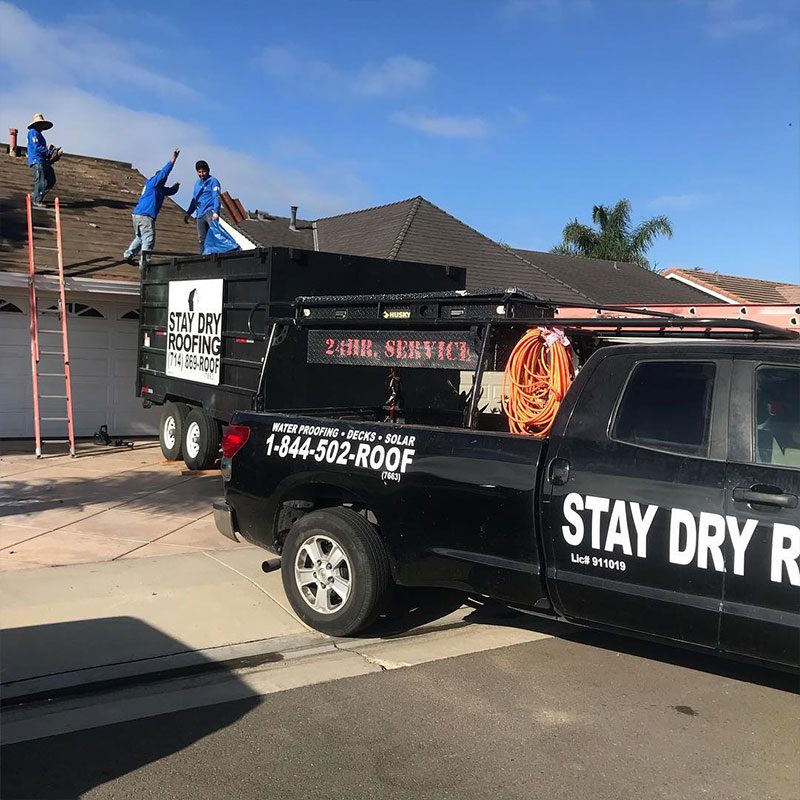
Welcome to Anaheim Roof Repairs (a specialized rapid-response division of Stay Dry Roofing), your premier local authority for Storm Damage Repair and Emergency Roofing Services in Anaheim, California, and the surrounding North Orange County communities.
When a severe weather event strikes Anaheim—whether it is a violent Santa Ana windstorm ripping shingles from your roof, a massive eucalyptus tree branch crashing through your structural decking, or a sudden atmospheric river flooding your attic—panic is the natural human response. A breached roof leaves your family exposed, your interior valuables vulnerable to destruction, and your home’s structural integrity severely compromised. You do not have time to wait for standard business hours. You need immediate, professional, and permanent intervention.
Strategic Service Note: We proudly operate as the dedicated North Orange County emergency dispatch and storm mitigation branch of our corporate headquarters, Stay Dry Roofing Mission Viejo. This highly strategic dual-location infrastructure guarantees that when disaster strikes in the middle of the night, you receive the hyper-localized, rapid-response care of a dedicated Anaheim emergency crew, fully empowered by the immense equipment fleets, heavy structural shoring materials, and established financial stability of South Orange County’s most prestigious roofing enterprise.
The Anatomy of Anaheim Storm Damage
Anaheim is a sprawling, dynamic municipality, home to over 343,500 residents according to the latest demographic projections from the US Census Bureau. The homes here—ranging from the historic 1920s bungalows in the Anaheim Colony to the sprawling Mediterranean luxury estates in Anaheim Hills—endure a specific, highly aggressive meteorological cycle.
Southern California is not generally known for hurricanes or tornadoes. However, the specific weather phenomena that do strike Orange County cause localized, catastrophic roofing emergencies that require highly specialized repair techniques.
1. The Devastation of the Santa Ana Winds
The absolute most common cause of acute roofing emergencies in North Orange County is the Santa Ana winds. Every autumn and winter, high-pressure systems in the Great Basin force air down through the mountain passes. As the air descends, it compresses, heats up, and gains terrifying velocity.
- The Velocity: According to meteorological data from the National Weather Service (NWS), these dry, downslope winds frequently exceed 60 to 80 mph as they funnel through the Santa Ana Canyon into Anaheim Hills and East Anaheim.
- The Structural Threat: At 80 mph, the aerodynamic uplift forces acting on your roof are immense. The wind creates a vacuum over the roofline. It will easily peel back the edges of asphalt shingles, snapping their thermal sealant strips. It will violently lift heavy concrete tiles, shattering them against each other, and it will effortlessly rip off ridge caps and metal chimney flashings. Once the outer layer is stripped away, the fragile underlayment is exposed, leaving the home completely defenseless against any subsequent rainfall.
2. Fallen Trees and Blunt Force Impact
Anaheim is famous for its beautiful, mature urban canopy. The city is lined with towering eucalyptus, native oaks, heavy palm trees, and historic jacarandas.
- The Danger: During a high-velocity Santa Ana wind event, or when the clay soil becomes super-saturated during a winter deluge, the root systems of these massive trees can fail, or heavy limbs can snap.
- The Damage: A 500-pound tree branch falling onto your roof acts like a spear. It does not just break a few tiles; it shatters the structural plywood decking and frequently snaps the load-bearing rafter tails beneath. This creates a massive, gaping hole directly into your attic and living space, requiring immediate structural shoring and emergency heavy-duty tarping to prevent total interior flooding and structural collapse.
3. Atmospheric Rivers and “Flash” Leaks
While Anaheim only averages about 13 to 14 inches of rain annually, weather patterns tracked by the National Oceanic and Atmospheric Administration (NOAA) show that this precipitation frequently arrives in concentrated “atmospheric rivers.”
- The Threat: When a sudden winter storm drops two to three inches of rain in a 12-hour period on a roof that has been baking and shrinking in the sun for nine months, micro-cracks in the sealants are instantly overwhelmed.
- The Damage: This causes sudden, high-volume interior “flash” leaks. Water pours into the attic, saturates the insulation instantly, and causes ceiling drywall to pool with water and collapse onto interior furniture and hardwood floors.
4. Rare but Destructive Hail Microbursts
While incredibly rare in Southern California, localized convective thunderstorms occasionally drop hail across the Anaheim flatlands.
- The Damage: Hailstones act like a hammer. When they strike an asphalt shingle, they crush the fiberglass matting and knock away the protective ceramic granules, creating a “bruise.” While it may not leak the next day, that bruised shingle will rapidly degrade under the Anaheim sun, leading to a massive, premature roof failure within a few short years.
Immediate Steps to Take During a Roofing Emergency
If you are currently experiencing a roofing emergency—whether a tree has struck your home or water is pouring through your ceiling—panic will only lead to further damage or injury.
If you are dealing with storm damage in Anaheim, follow these critical steps while you wait for the Anaheim Roof Repairs emergency rapid-response team to arrive:
1. Prioritize Human Safety First
- Evacuation: If a large tree has compromised the structural framing of your home, or if your ceiling is heavily bowing and looks ready to collapse, evacuate that room immediately. Do not attempt to save furniture if the structure is groaning or cracking.
- Electrical Hazards: Water and electricity are a lethal combination. If water is actively leaking near light fixtures, ceiling fans, or electrical outlets, go directly to your main breaker panel and shut off the electricity to that specific zone of the house.
- Do Not Climb on the Roof: Under absolutely no circumstances should you attempt to climb onto a wet, storm-damaged roof in the dark or during high winds. Emergency storm roofing requires specialized fall-arrest harnesses, slip-resistant footwear, and intense safety protocol training. Leave this highly dangerous work to our insured professionals.
2. Mitigate Interior Water Damage
- Contain the Leak: Place heavy-duty plastic storage bins, buckets, or large cooking pots directly under the active leak.
- Relieve Ceiling Pressure: If water is pooling inside your ceiling drywall, creating a large, sagging “bubble,” place a large bucket underneath it. Take a screwdriver, a nail, or an ice pick and carefully poke a small hole in the dead center of the bubble. This allows the water to drain into the bucket predictably, rather than building up pressure and causing the entire heavy drywall panel to violently tear away from the ceiling joists.
- Protect Valuables: Move furniture, rugs, electronics, and irreplaceable personal items away from the splash zone. Drape waterproof tarps or plastic drop cloths over heavy furniture (like pianos or large sectionals) that cannot be moved.
3. Call the Emergency Hotline
Call Anaheim Roof Repairs immediately. Our dispatchers are standing by. We will take your address, assess the severity of the situation over the phone, instruct you on further safety protocols, and dispatch an emergency response vehicle to your Orange County property.
Our Emergency Storm Damage Repair Services
When you contact Anaheim Roof Repairs for a storm emergency, we do not just arrive to take notes. We arrive in fully stocked emergency vehicles equipped to immediately stop the bleeding, stabilize the structure, and set the stage for permanent restoration.
Phase 1: Rapid Emergency Tarping & Mitigation
The primary goal in the middle of a storm is water exclusion. It is physically impossible (and illegal per building codes) to perform permanent shingle weaving or hot-tar application while it is pouring rain.
- Heavy-Duty Tarping: We do not simply lay a thin blue tarp on the roof and weigh it down with sandbags. Our crews utilize industrial-grade, woven polyethylene tarps. We securely batten the tarps directly to the roof deck using furring strips and specialized cap nails. This ensures the tarp remains drum-tight and watertight, even if the 60-mph Santa Ana winds continue to howl.
- Shrink Wrapping: For massive structural breaches or complex commercial flat roofs near the Platinum Triangle, we offer emergency shrink-wrapping services. This involves covering the damaged area with a specialized plastic membrane and using a heat gun to shrink it tight, creating a seamless, waterproof seal that can easily last for months while you navigate complex insurance claims.
Phase 2: Tree Removal & Structural Shoring
If a tree has fallen on your home, tarping alone is insufficient.
- Debris Extraction: We safely cut and clear the debris from the impact zone to assess the structural damage beneath.
- Temporary Shoring: If a fallen tree or extreme wind event has snapped your roof trusses, we provide immediate temporary interior and exterior shoring. We utilize heavy timbers and hydraulic jacks to support the compromised roof deck, preventing further structural settling or a secondary roof collapse until permanent engineering plans can be drafted.
Phase 3: Permanent Storm Restoration
Once the storm passes and conditions are safe, we return to perform the permanent, warrantied repair.
- We meticulously match your existing shingles, concrete tiles, or metal panels.
- We replace shattered structural decking, sister broken rafter tails, and integrate brand-new, high-gauge metal flashings.
- We do not leave until your roof is restored to a condition that is functionally and aesthetically superior to its pre-storm state.
Navigating Storm Damage Insurance Claims in California
A roofing emergency is incredibly stressful, but fighting with your homeowner’s insurance company can be a nightmare. Because Anaheim Roof Repairs responds to hundreds of acute storm damage events across North Orange County, we are highly experienced in the forensic documentation required by insurance carriers.
In California, the Department of Insurance (CDI) heavily regulates how claims must be handled, but the burden of proof always falls on the homeowner. We help you build an undeniable, data-backed case.
1. The “Act of God” vs. Negligence
Homeowner’s insurance generally covers sudden, accidental damage caused by extreme weather (legally defined as an “Act of God”), such as 70-mph winds tearing off tiles or a healthy tree branch crushing your roof. Insurance typically does not cover leaks resulting from an ancient roof, long-term dry rot, or a lack of basic maintenance.
- Our Forensic Role: When we arrive for an emergency call, our first step is aggressive documentation. We take dozens of high-resolution photos and thermal imaging scans of the acute storm damage before we install the emergency tarp. We provide you with a highly detailed, professional incident report that clearly distinguishes the fresh, acute storm damage from normal wear and tear, making it extremely difficult for an insurance adjuster to wrongfully deny your claim based on “pre-existing conditions.”
2. The Legal Duty to Mitigate Damage
This is the most critical insurance factor for Anaheim homeowners to understand. Most California homeowner’s insurance policies explicitly state that the policyholder has a strict “duty to mitigate further damage.” * The Trap: This means that if a Santa Ana windstorm blows a hole in your roof on a Friday night, and you choose to wait until Monday to call a roofer, your insurance company can legally deny coverage for any interior water damage to your hardwood floors, drywall, or furniture that occurred over the weekend.
- The Protection: By calling our emergency line and having us professionally tarp the roof immediately, you fulfill your legal duty to mitigate damage. This keeps your insurance claim fully compliant and valid. Furthermore, the cost of emergency tarping is almost always fully reimbursable under your policy.
3. Detailed Xactimate Estimating
Once the emergency is stabilized, we utilize Xactimate—the exact same estimating software used by 90% of insurance adjusters—to provide a line-by-line quote for the permanent roof replacement or repair. This ensures our pricing language matches the adjuster’s language perfectly, drastically speeding up the approval process so we can begin putting your home back together.
The Severe Dangers of Delayed Storm Repair
In the highly competitive Orange County real estate market, your home is an immense financial asset. According to early 2026 real estate data and localized housing market analytics provided by Redfin, the median single-family home price in Orange County holds incredibly strong at approximately $1.2 Million.
Delaying emergency storm repairs, even by a few days to “wait and see,” triggers a cascade of secondary damage that will drastically inflate your repair costs and destroy your equity.
Toxic Mold Proliferation (EPA Warning)
Water intrusion inside an Anaheim home is a biological ticking time bomb. According to federal health guidelines from the Environmental Protection Agency (EPA), toxic mold (such as Stachybotrys chartarum) will germinate on damp organic materials—like drywall, attic framing, and wet carpet—within 24 to 48 hours of water exposure.
- Our rapid emergency response stops the water intrusion instantly, allowing you to begin the drying process with industrial dehumidifiers before mold has a chance to take root. Once mold establishes a colony, simple roofing repairs mutate into massive, hazardous material remediation projects.
Insulation Ruin and Title 24 Failure
When a breached roof allows rain to soak your attic insulation, the fiberglass or blown-in cellulose instantly compresses and loses 100% of its thermal resistance (R-value).
- The California Energy Commission (CEC) strictly mandates energy efficiency through the Title 24 Building Standards.
- Wet insulation destroys your home’s thermal envelope, causing your HVAC unit to run continuously and driving your utility bills through the roof.
Electrical Fire Hazards
Water creeping through ceiling cavities often finds the path of least resistance—which is frequently along electrical wiring pathways. Rainwater entering recessed lighting canisters, ceiling fans, or smoke detectors can cause immediate short circuits or, in worst-case scenarios, electrical fires inside the walls.
Legal Compliance: Permitting Permanent Storm Repairs
While emergency tarping does not require a permit, repairing the permanent structural damage caused by a storm is heavily regulated by local municipalities.
If a fallen tree has shattered your roof decking, or if high winds require the replacement of more than 100 square feet of shingles, the City of Anaheim Building Division legally requires a structural reroofing permit.
Our Regulatory Guarantee: You do not have to worry about navigating California building codes while dealing with the stress of storm damage. We handle 100% of the municipal red tape. We draft the structural repair plans, pull the permits from the Anaheim Permit Assistance Center, submit the necessary Title 24 energy compliance forms, and walk the repaired structure with the city inspector to guarantee your home is legally compliant, safe, and fully up to code.
Our Corporate Synergy: The Mission Viejo Hub
While this website is entirely dedicated to serving the specific emergency dispatch, storm mitigation, and repair needs of Anaheim, Fullerton, Orange, Placentia, and Brea residents, our operations are deeply integrated with our corporate family.
Our main executive headquarters is Stay Dry Roofing Mission Viejo.
Why does this dual-hub model provide massive value to Anaheim homeowners during a storm?
When a massive regional storm hits Orange County, local, single-truck roofers are instantly overwhelmed. They run out of tarps, they run out of manpower, and they stop answering their phones.
By operating under the umbrella of our Mission Viejo headquarters—the premier roofing and emergency storm contractor for South Orange County—we offer our Anaheim clients the absolute best of both worlds:
- The personalized, rapid-response emergency dispatch of a dedicated local Anaheim crew.
- The immense buying power, massive emergency vehicle fleets, endless supply of industrial tarps, and rock-solid financial stability of a massive regional enterprise. We do not run out of supplies.
If you own an investment property, manage a commercial facility, or have family located in South Orange County cities like San Clemente, Dana Point, Laguna Niguel, Lake Forest, or Irvine, please direct them to our Mission Viejo headquarters. Our South OC teams specialize in the highly corrosive coastal micro-climates and massive HOA storm recovery projects unique to South County. By maintaining these two distinct powerhouses, Stay Dry Roofing effectively blankets the entirety of Orange County with unmatched emergency roofing expertise.
Frequently Asked Questions
What exactly qualifies as a roofing emergency in Anaheim?
A roofing emergency is any situation that actively allows water to enter the living or operational space of a building, or any event that severely compromises the structural safety of the roof. Examples include: a tree falling on the house, severe Santa Ana winds tearing off a massive section of shingles or tiles, a sudden, heavy leak pouring through the ceiling during an atmospheric river, or a partial roof deck collapse.
How fast can you get to my house for an emergency tarping?
In most cases within our immediate North Orange County service area (Anaheim, Fullerton, Orange), we aim to have an emergency response team on your property within 1 to 3 hours of your initial call, traffic and severe weather conditions permitting.
Can you just fix the roof completely in the middle of the night during the storm?
No, and any contractor who promises they can is lying to you. It is physically impossible to achieve a permanent, watertight seal with asphalt, caulking, or hot-tar when the building materials are saturated with water. Furthermore, the City of Anaheim requires permits and structural inspections for permanent repairs. Our emergency service is designed to stop the water, secure the building with heavy-duty tarps, and protect your interior. Once the weather clears and conditions are safe, we return to perform the permanent, warrantied repair.
Will my insurance pay for the emergency 24-hour service call?
In almost all storm-damage scenarios, yes. Because your homeowner’s insurance policy explicitly requires you to mitigate further damage, the cost of emergency tarping, temporary structural shoring, and our after-hours dispatch fee is typically entirely reimbursable under your policy. We provide detailed invoices specifically formatted for your insurance adjuster to ensure you are reimbursed.
I have a tile roof. The winds were strong, but I don’t see any broken tiles. Am I safe?
Not necessarily. The Santa Ana winds can create immense aerodynamic uplift that “chatters” or lifts concrete tiles just enough to snap the waterproof underlayment beneath them, before the tile drops back into place. From the street, the roof looks completely intact, but the waterproofing layer is destroyed. We offer post-storm inspections using thermal imaging to detect these hidden, wind-induced underlayment failures before they turn into massive leaks.
Stop the Damage. Secure Your Anaheim Home Today.
A storm-damaged roof does not heal itself. Every minute that your home remains exposed to the elements, water is destroying your drywall, breeding toxic mold, and depreciating the immense financial value of your Orange County property.
In an emergency, you do not have time to gamble on unlicensed handymen or out-of-town “storm chasers” who disappear the moment the sun comes out. Trust the heavily insured, highly certified local emergency experts who utilize advanced mitigation techniques, heavy-duty structural shoring, and aggressive insurance documentation to protect your family and your investment.
From emergency midnight tarping to comprehensive permanent structural restoration, Anaheim Roof Repairs (powered by Stay Dry Roofing) is ready to deploy and restore your home’s defenses.
If you have an active leak, wind damage, or structural roof breach, do not wait. Contact our 24/7 Emergency Dispatch Center immediately!
(Visit our contact page or call our Anaheim emergency hotline directly. For enterprise portfolio storm recovery, HOA damage mitigation, or South Orange County emergency service, please visit our Main Mission Viejo Headquarters).
Sources & Citations
- United States Census Bureau: Demographic projections and housing density statistics for Anaheim, California, utilized to quantify local residential infrastructure and emergency service demands during mass weather events. (census.gov)
- National Weather Service (NWS) & National Oceanic and Atmospheric Administration (NOAA): Meteorological tracking data verifying the localized atmospheric river precipitation patterns, and the 60 to 80 mph Santa Ana wind velocities that forcefully destroy exterior roofing structures and propel debris in Southern California. (weather.gov / noaa.gov)
- California Department of Insurance (CDI): State regulations and legal guidelines governing homeowner’s insurance claims, specifically outlining the policyholder’s strict legal “duty to mitigate further damage” following an Act of God or acute storm event. (insurance.ca.gov)
- Environmental Protection Agency (EPA): Federal guidelines on indoor air quality and biological pollutants, explicitly outlining the moisture content requirements and the critical 24-to-48-hour timeline for toxic mold (Stachybotrys chartarum) proliferation following acute water intrusion from storm damage. (epa.gov/mold)
- City of Anaheim Building Division: Municipal codes governing emergency structural shoring, mandatory reroofing permit requirements, load-bearing wood repair, and local ordinance compliance for residential property alterations following a storm event. (anaheim.net/203/Building-Division)
- California Energy Commission (CEC): State regulations detailing the 2025/2026 Building Energy Efficiency Standards (Title 24, Part 6), outlining how moisture saturation from storm leaks completely destroys the mandated thermal resistance (R-value) of required residential attic insulation. (energy.ca.gov)
- Orange County Real Estate Market Data (2026): Macro-economic housing and real estate analytics verifying the current median single-family home price in Orange County at approximately $1.2 Million, illustrating the critical financial ROI of rapid emergency property mitigation. (Market data corroborated via Redfin Housing Market Analytics, Q1 2026). (redfin.com/county/332/CA/Orange-County/housing-market)


