
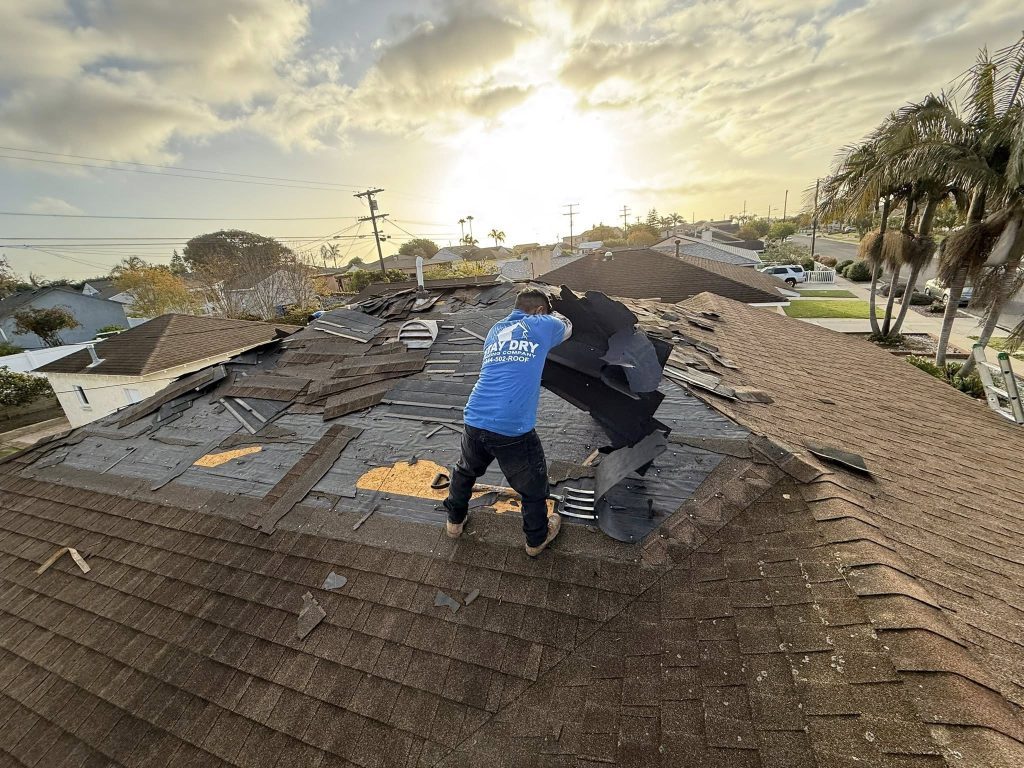
Welcome to Anaheim Roof Repairs (a specialized commercial and residential division of Stay Dry Roofing), North Orange County’s premier authority for high-precision Flat Roof Repair Services.
Flat roofing is an entirely different discipline from traditional sloped roofing. When a sloped shingle or tile roof fails, gravity generally works to pull the water down and off the building. On a flat roof, gravity is the enemy. A single puncture, a separated seam, or a sagging section of insulation turns your roof into a literal swimming pool suspended over your living room or commercial inventory. Repairing these systems requires highly specialized materials, complex thermal-welding techniques, and flawless drainage engineering.
Whether you are dealing with massive ponding water on a commercial warehouse in the Platinum Triangle or membrane blistering on a mid-century modern home in West Anaheim, our elite flat roofing crews deliver watertight perfection designed to withstand the unforgiving extremes of the Southern California climate.
Strategic Service Note: We proudly operate as the dedicated North Orange County flat roof diagnostic and repair branch of our corporate headquarters, Stay Dry Roofing Mission Viejo. This highly strategic dual-location infrastructure guarantees that you receive the hyper-localized, rapid-response care of a dedicated Anaheim commercial and residential crew, fully empowered by the immense equipment fleets, premium membrane sourcing, and established financial stability of South Orange County’s most prestigious roofing enterprise.
The Complexities of Flat Roofing in the Anaheim Climate
Anaheim is an economic and residential powerhouse. With a population of approximately 343,500 residents and over 25,000 licensed businesses operating within city limits (according to the latest demographic projections from the US Census Bureau), the sheer square footage of flat roofing in this city is immense.
From the sprawling industrial parks near the Anaheim Resort District to the iconic mid-century post-war residential architecture, flat roofs dominate the local skyline. However, the specific climate profile of Orange County places immense, aggressive stress on these flat systems.
1. The Physics of Ponding Water
The term “flat roof” is actually an architectural misnomer. By design, a flat roof must have a slight slope (typically ¼ inch of fall per foot of run) to ensure water flows toward the drains and scuppers.
- The Failure: Over time, buildings settle. Insulation boards compress under the weight of foot traffic or heavy rooftop HVAC units. When this happens, low spots form.
- The Danger: When winter atmospheric rivers hit Anaheim, these low spots collect water. If water remains on a roof for 48 hours after a rainstorm, the industry officially classifies it as “ponding water.”
- The Consequence: Water is incredibly heavy, weighing 8.34 pounds per gallon. A ponding area measuring 10 feet by 10 feet, just one inch deep, adds over 520 pounds of dead-weight to that specific section of your roof deck. This massive weight causes the roof to sag further, collecting even more water in a vicious cycle until the structural trusses physically snap and the roof collapses. Furthermore, ponding water acts as a magnifying glass, intensifying UV rays and rapidly degrading the roofing membrane beneath it.
2. Thermal Shock and Membrane Blistering
Anaheim experiences over 280 days of intense, direct sunshine every year.
- The Failure: During a scorching August afternoon, a dark or dirty flat roof can reach surface temperatures exceeding 160°F. If there is even a microscopic amount of moisture trapped between the layers of your roofing membrane (or underneath it in the insulation), this extreme heat causes that moisture to vaporize and expand.
- The Result: Because the gas cannot escape, it physically pushes the top layer of the membrane upward, creating large, bubble-like “blisters” (often called “alligatoring” on older asphalt roofs). When the temperature drops by 40 degrees at night, the material contracts. This violent daily cycle of thermal shock eventually causes the blisters to crack wide open, creating massive entry points for the next rainstorm.
3. Punctures and HVAC Foot Traffic
Flat roofs are highly utilized spaces. Commercial buildings in Anaheim house massive HVAC cooling towers, skylights, and solar arrays.
- The Failure: When HVAC technicians, solar installers, or window washers access the roof, they frequently drop sharp tools, drag heavy equipment across the delicate membrane, or leave screws behind.
- The Result: Even a tiny, pinhole puncture in an EPDM or TPO membrane breaks the monolithic, watertight seal. Because the roof is flat, water will find that pinhole, seep into the insulation, and spread for dozens of feet in every direction before finally dripping through a ceiling tile inside your commercial space.
Flat Roof Membranes We Repair
Not all flat roofs are created equal. Identifying the specific chemical composition of your roof is critical, as applying the wrong patching material will cause a catastrophic chemical reaction that destroys the membrane. At Anaheim Roof Repairs, our technicians are certified in the repair of all major low-slope systems:
1. TPO (Thermoplastic Polyolefin)
TPO is currently the fastest-growing and most popular flat roofing material in the world, recognizable by its bright white, highly reflective surface.
- Common Issues: Punctures from foot traffic and seam separation. TPO seams are heat-welded together. If the original installer used the wrong temperature on their robotic welder, the seams will pull apart under Anaheim’s thermal shock.
- Our Repair Process: We chemically clean the compromised TPO membrane. We do not use messy tar or caulk. Our technicians use specialized, handheld Leister hot-air welders to fuse a brand-new patch of TPO directly into the existing molecular structure of the roof, restoring a permanent, seamless plastic barrier.
2. EPDM (Ethylene Propylene Diene Terpolymer)
EPDM is essentially a massive, highly durable rubber sheet, commonly black in color, widely used on commercial buildings throughout the 1990s and 2000s.
- Common Issues: EPDM roofs generally do not blister, but they suffer heavily from seam failure and shrinkage. The membrane is glued together using specialized adhesives and seam tape. Over 15 to 20 years, these adhesives dry out, and the rubber physically shrinks, pulling the seams apart and tearing away from the parapet walls.
- Our Repair Process: You cannot heat-weld rubber. We scrub the EPDM with specialized weathering membrane cleaners and EPDM primers. We then install heavy-duty, uncured flashing tape and commercial-grade lap sealants to permanently re-bond the separated rubber sheets and accommodate future thermal movement.
3. PVC (Polyvinyl Chloride)
PVC is the ultimate heavy-duty, premium flat roofing solution, frequently utilized by Anaheim restaurants and food processing facilities because it is highly resistant to animal fats and chemical exhausts.
- Common Issues: While incredibly durable, older PVC roofs can become highly rigid and brittle as plasticizers migrate out of the material over decades of UV exposure. When it becomes brittle, it is highly susceptible to shattering or cracking under heavy foot traffic or dropped tools.
- Our Repair Process: Similar to TPO, PVC is a weldable thermoplastic. We clean the area to remove all chemical residues and heat-weld a reinforced PVC patch directly over the fracture.
4. Modified Bitumen (Torch Down / Built-Up Roofing)
Commonly found on residential flat roofs, walk-out balconies, and mid-century modern homes. It consists of multiple layers of asphalt infused with rubber or plastic modifiers.
- Common Issues: Blistering, “alligator” cracking, and edge lifting. Because it is a dark, asphalt-based product, it absorbs massive amounts of heat and degrades rapidly under the Orange County sun.
- Our Repair Process: For severe blistering, we carefully cut the blister open, dry out the trapped moisture, and utilize an open-flame torch to melt a brand-new layer of modified bitumen over the compromised section. We then top the repair with highly reflective ceramic granules to protect the new asphalt from UV damage.
Solving the Ponding Water Crisis: Tapered Insulation and Crickets
If your Anaheim flat roof suffers from persistent ponding water, simply patching the membrane will not solve the problem. The water will continue to sit, and the new patch will fail. The only way to permanently fix ponding water is to re-engineer the roof’s slope.
We specialize in Hydrological Drainage Correction:
- Laser Leveling Diagnostics: We map the exact topography of your roof to determine exactly where the structural deck has settled and why the water is not reaching the primary drains or secondary scuppers.
- Tapered Poly-ISO Insulation: We carefully cut open the membrane and install dense Polyisocyanurate (Poly-ISO) foam insulation boards that are factory-cut on an angle. By stacking these angled boards, we artificially build a new slope directly into the low spot.
- Building Crickets: Behind large rooftop HVAC units or massive skylights, water often gets trapped because it cannot flow through the obstruction. We build “crickets” (diamond-shaped water diverters) out of tapered insulation to force the water around the sides of the obstruction and down toward the drains.
- Scupper Expansion: Often, the ponding water is simply caused by drains that are too small to handle an Anaheim atmospheric river. We can cut the parapet walls and install massive, high-capacity overflow scuppers to guarantee water always has an emergency exit off the roof.
Compliance: Title 24 “Cool Roofs” and Anaheim Building Codes
Commercial and residential flat roof repair in California is heavily regulated. Because flat roofs receive the most direct, aggressive angle of solar radiation throughout the day, the energy efficiency requirements are incredibly strict.
California Title 24 Energy Efficiency
The California Energy Commission (CEC) heavily regulates building energy efficiency through the newly updated 2025/2026 Title 24 Building Standards.
- If a flat roof repair involves replacing a significant square footage of the roof or installing a complete restorative coating, the materials must meet strict Solar Reflectance (SR) and Thermal Emittance (TE) minimums.
- The Solution: We utilize brilliant-white TPO and high-solids Silicone Elastomeric Coatings that aggressively reflect the sun’s infrared rays back into the atmosphere. This drastically lowers the internal temperature of your building, massively reducing the strain on your commercial HVAC units and slashing your Southern California Edison (SCE) electrical bills. We handle all mandatory CF-1R energy compliance forms required by the state.
The City of Anaheim Building Division
According to the City of Anaheim Building Division, addressing significant structural ponding water or replacing load-bearing insulation layers requires a building permit.
- Our Guarantee: We handle 100% of the municipal red tape. If your flat roof repair requires structural slope correction or a commercial reroof permit, we draft the engineering plans, pull the permits from the Anaheim Permit Assistance Center, and walk the roof with the city inspector to guarantee your commercial facility or home is legally compliant and safe from liability.
The Devastating Cost of Flat Roof Leaks
Whether you own a commercial warehouse in the Platinum Triangle or a mid-century home in West Anaheim, your property is a massive financial asset. According to the latest real estate data provided by Redfin, the median single-family home price in Orange County remains fiercely strong at approximately $1.2 Million, while commercial real estate valuations per square foot continue to break regional records.
Allowing a flat roof leak to persist is a catastrophic financial risk.
1. Commercial Inventory and Lease Disruption
If you manage a retail center or an industrial warehouse in Anaheim, a flat roof leak does not just damage drywall. It destroys thousands of dollars of commercial inventory, ruins sensitive server racks, and creates massive slip-and-fall liabilities for your employees and customers. Furthermore, commercial tenants will break their long-term leases if you cannot provide a watertight facility, costing you massive amounts of monthly revenue.
2. Toxic Mold Proliferation (EPA Warning)
Because flat roofs often feature a thick layer of insulation directly below the membrane, a leak turns that insulation into a massive, soggy sponge that stays wet for months.
- According to federal health guidelines from the Environmental Protection Agency (EPA), toxic mold (such as Stachybotrys chartarum) will germinate on damp organic materials within 24 to 48 hours.
- This breeds unseen mold colonies that release toxic spores into your commercial or residential HVAC system, triggering hazardous material remediation protocols that easily exceed $20,000 to $50,000 for large commercial spaces.
3. Structural Deck Failure
Unlike a sloped roof where water runs off rapidly, water entering a flat roof sits directly on top of the structural steel or plywood decking. Over time, this constant saturation rusts the steel Q-decking or causes massive dry rot in the plywood. Replacing structural decking on a commercial building requires heavy machinery, cranes, and massive structural retrofitting costs.
Flat Roof Restoration: The Silicone Coating Alternative
If your flat roof is suffering from extensive UV degradation, minor blistering, and thousands of micro-cracks, but the underlying insulation is still completely dry, you may not need a full roof replacement.
AtAnaheim Roof Repairs, we specialize in Silicone Roof Restoration.
- The Process: We aggressively pressure wash the entire flat roof, repair all blisters and localized seam separations, and apply a thick, seamless, fluid-applied high-solids silicone coating over the entire surface.
- The Benefit: Silicone is inorganic, meaning it will absolutely never degrade under the UV rays of the Anaheim sun. It creates a seamless, watertight, highly reflective membrane that immediately halts leaks, easily passes Title 24 inspections, and effectively resets your roof’s lifespan for a fraction of the cost (and zero demolition disruption) of a full commercial replacement. Most importantly, high-grade silicone is one of the only materials on earth guaranteed to withstand indefinite ponding water without breaking down.
Our Corporate Synergy: The Mission Viejo Hub
While this website is entirely dedicated to serving the specific commercial and residential flat roofing needs of Anaheim, Fullerton, Orange, Placentia, and Brea, our operations are deeply integrated with our corporate family.
Our main executive headquarters is Stay Dry Roofing Mission Viejo.
Why does this dual-hub model provide massive value to Anaheim property owners?
Commercial flat roofing requires massive capital investment. It demands heavy lifting equipment (cranes for moving insulation), specialized robotic hot-air welders that cost tens of thousands of dollars, and massive multi-million dollar general liability insurance policies required by commercial property management firms.
Many small, local Anaheim residential roofers simply do not have the infrastructure, the insurance, or the factory certifications to safely execute a 50,000-square-foot commercial TPO repair.
By operating under the umbrella of our Mission Viejo headquarters—the premier commercial and residential roofing contractor for South Orange County—we offer our Anaheim clients the absolute best of both worlds:
- The rapid-response emergency leak dispatch of a dedicated local North OC crew.
- The immense buying power, elite commercial material sourcing, and rock-solid financial stability of a massive regional enterprise. We hold the highest-tier factory certifications allowing us to provide 20-year and 30-year No-Dollar-Limit (NDL) commercial warranties.
If you own an investment property, manage a commercial portfolio, or oversee an HOA located south of the El Toro Y (San Clemente, Dana Point, Laguna Niguel, Lake Forest, or Irvine), please direct those projects to our Mission Viejo headquarters. Our South OC teams specialize in the highly corrosive coastal micro-climates and ultra-strict commercial compliance codes unique to South County developments. By maintaining these two distinct powerhouses, Stay Dry Roofing effectively blankets the entirety of Orange County with unmatched commercial and residential roofing expertise.
Frequently Asked Questions
Can I just use black roofing tar to patch a leak on my TPO or PVC roof?
Absolutely never do this. Applying petroleum-based roofing mastic (tar) to a thermoplastic membrane (like TPO or PVC) will cause a violent chemical reaction. The petroleum will literally eat a massive hole through the plastic membrane within a few weeks, turning a tiny puncture into a catastrophic leak. Furthermore, it immediately voids your commercial manufacturer warranty and makes a proper heat-welded repair impossible without cutting out a massive section of the roof.
How do you find a leak on a flat roof if the whole roof is covered in water?
We utilize advanced diagnostic technology. Because flat roof leaks frequently travel through the insulation layers, the hole in the membrane is rarely directly above the leak inside the building. We utilize Forward Looking Infrared (FLIR) thermal imaging cameras. When the sun goes down, the dry insulation cools off rapidly, but the wet insulation retains heat. The thermal camera shows us exactly where the water is trapped under the membrane, allowing us to pinpoint the puncture with surgical accuracy.
Is it normal for my flat roof to have a little bit of water on it after a rainstorm?
Yes, temporary pooling is normal. However, if the water has not evaporated or drained off the roof completely within 48 hours of the rain stopping, it is officially classified as “ponding water.” Ponding water is a structural hazard and must be corrected through hydrological slope engineering (tapered insulation or crickets).
Will my commercial property insurance cover a flat roof repair?
If the roof membrane was punctured by a sudden, covered peril (like severe Santa Ana wind debris or vandalism), insurance will typically cover the repair. However, if the leak is caused by seam failure due to age, UV blistering, or long-term ponding water due to building settling, insurance carriers classify this as deferred maintenance and will deny the roof repair claim (though they may still cover the interior inventory damage). We provide highly detailed, thermal-imaged diagnostic reports to assist you with your claims adjuster.
How long does a silicone roof coating last?
A professionally applied, high-solids commercial silicone restoration coating can extend the life of an aging flat roof by 10 to 20 years. Because silicone is inorganic, it does not chalk, crack, or degrade under UV exposure. Many manufacturers offer robust 10, 15, and 20-year material warranties on their premium silicone systems.
Stop the Leak. Secure Your Building Today.
Water is relentless, and a compromised flat roof is actively threatening the structural integrity, inventory, and immense financial equity of your Anaheim property every single hour it goes unaddressed.
Do not trust your home or your commercial facility to inexperienced residential roofers attempting to learn commercial thermal-welding techniques on your dime. Trust the highly certified, local diagnostic experts who utilize advanced thermal technology, slope engineering, and molecular heat-welding to stop water intrusion permanently.
From eliminating ponding water to executing massive Title 24-compliant silicone restorations, Anaheim Roof Repairs (powered by Stay Dry Roofing) is ready to restore your property’s defenses and your peace of mind.
Don’t let ponding water destroy your roof deck. Contact us today to schedule your high-tech commercial or residential flat roof diagnostic and precision repair estimate!
(Visit our contact page or call our Anaheim commercial dispatch center directly. For enterprise portfolio diagnostic inquiries, NDL warranty management, or South Orange County commercial service, please visit our Main Mission Viejo Headquarters).
Sources & Citations
To guarantee our North Orange County commercial and residential clients receive the most accurate, scientifically sound, and legally compliant engineering information, the environmental data, health guidelines, and building codes referenced on this page are strictly sourced from the following verified federal and municipal authorities:
- United States Census Bureau: Demographic projections and business statistics for Anaheim, California (Projected 2026 Population: ~343,500; 25,000+ businesses), utilized to quantify the massive commercial flat roofing infrastructure demands and economic density within city limits. (census.gov)
- National Weather Service (NWS) & National Oceanic and Atmospheric Administration (NOAA): Meteorological tracking data verifying the localized atmospheric river precipitation patterns, maximum daily surface temperatures causing violent thermal shock, and the 60+ mph Santa Ana wind velocities that threaten commercial membrane integrity in Southern California. (weather.gov / noaa.gov)
- California Energy Commission (CEC): State regulations detailing the 2025/2026 Building Energy Efficiency Standards (Title 24, Part 6), outlining the strict legal mandates for Solar Reflectance (SR) and Thermal Emittance (TE) on low-slope (flat) commercial roofs to combat the urban heat island effect. (energy.ca.gov)
- Environmental Protection Agency (EPA): Federal guidelines on indoor air quality and biological pollutants, explicitly outlining the moisture content requirements and the critical 24-to-48-hour timeline for toxic mold (Stachybotrys chartarum) proliferation inside commercial wall cavities and residential spaces following flat roof insulation saturation. (epa.gov/mold)
- City of Anaheim Building Division: Municipal codes governing commercial reroofing permit requirements, mandatory structural load-bearing limits for ponding water, and local ordinance compliance for commercial property alterations to protect structural steel and concrete foundations. (anaheim.net/203/Building-Division)
- Orange County Real Estate Market Data (2026): Macro-economic housing and commercial real estate analytics verifying the current median single-family home price in Orange County at approximately $1.2 Million (with record commercial per-square-foot lease rates), illustrating the critical financial ROI of structural property protection and watertight commercial facility management. (Market data corroborated via Redfin Housing Market Analytics, Q1 2026). (redfin.com/county/332/CA/Orange-County/housing-market)


