
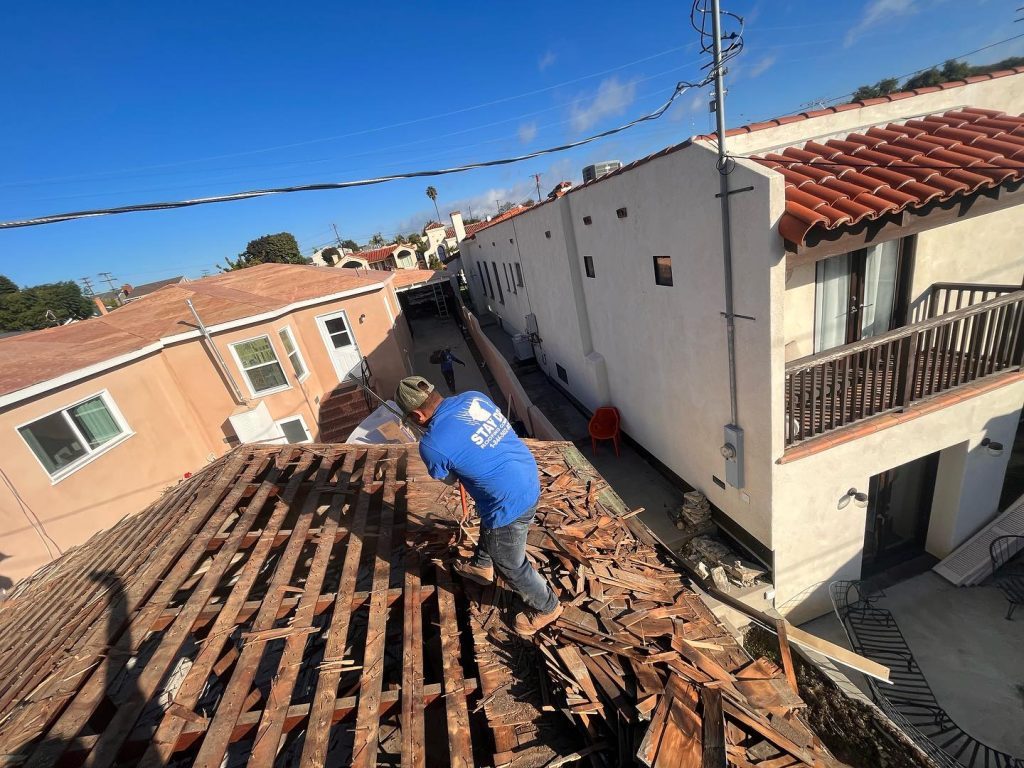
Welcome to Anaheim Roof Repairs (a specialized operational division of Stay Dry Roofing), your premier local authority for high-precision Roof Flashing Repair in Anaheim, California, and the surrounding North Orange County communities.
When a roof leaks, homeowners intuitively blame the shingles or the tiles. In reality, over 90% of all residential and commercial roof leaks do not occur in the middle of a continuous roof plane; they occur at the penetrations. Wherever a chimney, skylight, vent pipe, or adjacent wall breaks through the surface of your roof, it creates a massive structural vulnerability. The only thing keeping water from pouring through these gaps is a system of thin, precisely fabricated metal strips known as flashing. When this metal rusts, warps, or loses its seal, catastrophic water intrusion follows.
Strategic Service Note: We proudly operate as the dedicated North Orange County metal fabrication and diagnostic branch of our corporate headquarters, Stay Dry Roofing Mission Viejo. This highly strategic dual-location infrastructure guarantees that you receive the hyper-localized, rapid-response care of a dedicated Anaheim sheet-metal and roofing crew, fully empowered by the immense custom-fabrication equipment, premium material sourcing, and established financial stability of South Orange County’s most prestigious roofing enterprise.
What is Roof Flashing and Why Does it Fail?
Flashing is the unsung hero of your Anaheim home’s exterior defense system. It consists of specialized pieces of sheet metal—typically galvanized steel, aluminum, or copper—that are intricately cut, bent, and installed to bridge the gap between your roofing material (shingles, tiles, TPO) and a vertical surface (like a chimney brick wall or a plumbing pipe).
Its sole purpose is to intercept water that is flowing down the roof and safely direct it away from vulnerable seams and into the gutters. However, in the aggressive climate of Southern California, flashing faces a brutal, never-ending physical battle.
The Physics of Thermal Shock in Orange County
Anaheim is a vibrant city of over 343,500 residents, according to the latest demographic projections from the US Census Bureau. The homes here endure over 280 days of intense, direct sunshine annually. This creates a phenomenon known as “thermal shock,” which is the absolute nemesis of roof flashing.
- Different Expansion Rates: Your home is constructed from vastly different materials. A brick chimney, a wooden roof deck, an asphalt shingle, and a steel flashing panel all absorb heat differently.
- The Daily Movement: During a 95-degree afternoon, the metal flashing expands significantly. When the desert-influenced night air drops the temperature to 55 degrees, the metal rapidly contracts.
- The Failure: Because the wood, the brick, and the metal are expanding and contracting at different rates, they constantly pull against each other. Over several years, this relentless daily movement snaps roofing nails, bends the flashing out of shape, and tears the polyurethane sealants holding the system watertight.
UV Degradation of Sealants and Gaskets
Flashing systems rely on high-grade sealants and rubber gaskets to maintain a waterproof barrier where the metal meets the brick or pipe. The intense ultraviolet (UV) radiation in Anaheim literally bakes these petrochemicals. A flexible rubber plumbing boot installed on a West Anaheim home will turn hard, brittle, and crack open in as little as 7 to 10 years simply from sun exposure.
Santa Ana Winds and Driven Rain
Meteorological data from the National Weather Service (NWS) confirms that Anaheim is subjected to fierce Santa Ana winds exceeding 60 mph every autumn and winter. These winds do not just lift shingles; they drive rain sideways. If your drip-edge flashing (the metal at the very edge of your roof) or your chimney counter-flashing is slightly loose, the Santa Ana winds will forcefully blow rainwater uphill and underneath the metal strips, bypassing your roof’s defenses entirely.
Critical Flashing Zones We Repair in Anaheim
At Anaheim Roof Repairs, we do not believe in slapping black roofing tar over a leak and hoping for the best. Tar is a temporary bandage that will crack under the Anaheim sun within a single summer. We provide permanent, physical metal restoration.
We meticulously inspect, fabricate, and replace flashing in the following highly vulnerable zones:
1. Chimney Flashing (The #1 Leak Source)
Chimneys are massive, heavy structures that independently settle into the foundation at a different rate than the wooden framing of the house. This settling, combined with thermal shock, destroys chimney flashings. A proper chimney repair involves three distinct metal components:
- Step Flashing: We install L-shaped pieces of metal that are woven precisely between each individual course of shingles or tiles, stepping up the side of the chimney.
- Counter-Flashing: This is the critical outer shield. We utilize diamond-bladed grinders to cut a 1-inch deep groove (a reglet) directly into the chimney’s masonry mortar joints. We insert the folded lip of the new custom-bent sheet metal directly into the brickwork, securing it with specialized masonry wedges and sealing it with high-grade elastomeric caulking. This ensures water cascades down the brick and completely over the step flashing below.
- Chimney Crickets (Saddles): If your chimney is wider than 30 inches, the City of Anaheim Building Division building codes require a “cricket.” This is a custom-built, miniature peaked roof installed directly behind the chimney. We wrap this cricket in heavy-gauge metal to divert the rushing water and debris around the sides of the chimney, preventing a massive water bottleneck.
2. Plumbing Vent Boots and Pipe Collars
Every home in Anaheim has white PVC or cast-iron plumbing pipes protruding through the roof to allow sewer gases to escape.
- The Vulnerability: These pipes are sealed with a metal base and a rubber collar (a “boot”). As mentioned, the UV rays destroy this rubber rapidly. When the rubber cracks, rainwater runs straight down the outside of the pipe, into your attic, and down the interior walls of your bathrooms.
- The Repair: We carefully remove the shingles surrounding the pipe. We extract the rotted boot and install a premium, lead-based or high-temperature silicone-gasket flashing unit. We then expertly weave brand-new shingles over the flange, ensuring the water flows over the flashing and down the roof without ever touching the actual pipe.
3. Roof-to-Wall Intersections (Headwall and Sidewall Flashing)
Many multi-level homes in Anaheim Hills or homes with custom patio covers feature areas where a sloping roof intersects directly with a vertical siding wall or stucco wall.
- The Vulnerability: If the metal flashing is simply nailed over the top of the stucco, water running down the wall will easily slip behind the metal.
- The Repair: A permanent fix requires integrating the metal behind the exterior wall cladding. We carefully cut back the exterior stucco or wood siding. We install custom-bent “Z-flashing” or step flashing directly against the house’s structural sheathing, applying Ice & Water Shield membranes behind it. We then rebuild the stucco or siding over the top of the flashing, creating an impenetrable, cascading water barrier.
4. Drip Edge and Rake Flashing
This is the long strip of metal installed along the very perimeter of your roofline (at the eaves and the gables).
- The Vulnerability: Without a proper drip edge, water flowing off the roof will curl backward underneath the shingles via surface tension. This moisture soaks into the wooden fascia boards and soffits, causing massive dry rot.
- The Repair: We install heavy-gauge, corrosion-resistant drip edge metal that extends outward, forcing the water to break its surface tension and drop cleanly into your gutter system, protecting the entire structural perimeter of your home.
5. Skylight Flashing integration
Skylights are essentially massive holes cut into your roof. While the glass may be watertight, the metal curb connecting the skylight to the roof deck is highly prone to failure. We custom-fabricate heavy-duty aluminum saddle flashings and step flashings to wrap the entire skylight curb, ensuring flawless integration with your surrounding shingles or tiles.
Historic Preservation: Custom Copper Flashing in the Anaheim Colony
For residents living within the boundaries of the historic Anaheim Colony, roof repair is an exercise in architectural preservation.
The aesthetic guidelines of historic districts prohibit the use of cheap, modern galvanized steel on highly visible 1920s Craftsman bungalows or Tudor-style homes. For these elite properties, Anaheim Roof Repairs specializes in Custom Copper Flashing Fabrication.
- The Copper Advantage: Copper is the ultimate roofing metal. It is highly malleable, completely immune to rust, and naturally expands and contracts with thermal shock without cracking.
- The Aesthetic: Over time, copper reacts with the atmosphere to develop a stunning, protective green/brown patina that is the absolute hallmark of historical luxury architecture. Our sheet-metal artisans custom-solder copper chimney saddles, valley pans, and step flashings right on site, ensuring your home remains watertight while strictly adhering to historical zoning guidelines.
The True Cost of Ignored Flashing Leaks
In the highly competitive Orange County real estate market, your home is an immense financial asset. According to early 2026 real estate data and localized housing market analytics provided by Redfin, the median single-family home price in Orange County holds incredibly strong at approximately $1.2 Million.
Allowing a failed chimney flashing or a cracked pipe boot to go unrepaired is a catastrophic financial mistake. A flashing leak is insidious; it often drips slowly, hidden inside wall cavities for months before revealing itself as a ceiling stain. By the time you see it, the secondary damage is massive.
1. Toxic Mold Proliferation (EPA Warning)
According to the federal health guidelines from the Environmental Protection Agency (EPA), toxic mold (such as Stachybotrys chartarum) will germinate on damp organic materials—like drywall and attic framing—within 24 to 48 hours of a water intrusion event.
- A slow flashing leak creates a constant, hidden drip that keeps the interior wall cavities perpetually damp.
- This breeds unseen mold colonies that release spores directly into your HVAC system, causing severe respiratory issues for your family and triggering $15,000+ hazardous material remediation protocols.
2. Destruction of Title 24 Energy Efficiency
California enforces strict energy conservation laws. The California Energy Commission (CEC) heavily regulates your home’s thermal envelope through the Title 24 Building Standards.
- When water from a failed flashing drips onto your attic insulation, the fiberglass or cellulose immediately compresses and loses 100% of its thermal resistance (R-value).
- It becomes a soggy sponge, allowing superheated attic air to enter your living space. This forces your air conditioning unit to run constantly, destroying your energy efficiency and inflating your utility bills.
3. Structural Dry Rot and Termite Attraction
Water trapped by a failed headwall flashing will soak into the load-bearing wooden studs of your home. Over time, this breeds wood-decaying fungi (dry rot). Furthermore, subterranean and drywood termites are highly attracted to damp, decaying wood. A minor $400 flashing failure can quickly invite a whole-home termite infestation that requires structural framing replacement and expensive fumigation tenting.
Our Elite Diagnostic and Flashing Fabrication Process
When you contact Anaheim Roof Repairs, you are hiring investigative structural engineers and master metal fabricators. We do not guess where the water is coming from.
- Thermal Imaging Leak Detection: We utilize Forward Looking Infrared (FLIR) thermal cameras to scan your interior walls and ceilings around the chimney or skylight. Trapped moisture displays as a distinct thermal bloom, allowing us to trace the water’s path backward to the exact millimeter of failed flashing on the roof.
- Destructive Discovery (Tear-Out): A permanent repair requires removing the covering materials. We carefully extract the shingles, tiles, or exterior stucco surrounding the failed flashing to expose the wooden deck beneath.
- Dry Rot Remediation: We inspect the exposed plywood and framing. If the flashing leak has caused structural dry rot, our carpenters cut out the infected wood and install fresh, pressure-treated lumber to ensure the new metal has a solid, structural foundation to anchor to.
- Custom On-Site Metal Fabrication: We do not use pre-fabricated, one-size-fits-all metal pieces from big-box hardware stores. Every chimney and roof pitch is unique. Our technicians utilize heavy-duty metal brakes to custom-bend 24-gauge galvanized steel, aluminum, or 16-ounce copper right in your driveway, creating a bespoke, airtight fit for your specific home.
- Multi-Layered Waterproofing: Before the metal is installed, we adhere a self-sealing Ice & Water Shield membrane directly to the wood deck. The custom flashing is then installed over the membrane. Finally, the shingles or tiles are flawlessly woven back into place, creating a triple-layered defense system.
- Controlled Water Testing: To guarantee our workmanship, we frequently perform controlled water isolation testing with a calibrated hose system, verifying that the new flashing flawlessly repels high-volume water flow before we clean up and leave your property.
Navigating City of Anaheim Building Permits
Replacing minor flashing components, like a single plumbing vent boot, is generally considered routine maintenance. However, if a flashing failure has caused significant dry rot that requires the replacement of structural roof decking or load-bearing wall studs, municipal oversight is legally mandated.
According to the City of Anaheim Building Division, structural wood replacement requires a building permit and a municipal safety inspection.
Our Guarantee to You: You do not have to worry about navigating California building codes. We handle 100% of the municipal red tape. If your flashing repair requires structural intervention, we will draft the necessary scope of work, pull the permits from the Anaheim Permit Assistance Center, and walk the repaired structure with the city inspector. This guarantees your property remains legally compliant and safeguards your ability to sell the home in the future without disclosure issues.
Our Corporate Synergy: The Mission Viejo Hub
While this website is entirely dedicated to serving the specific metal fabrication and repair needs of Anaheim, Fullerton, Orange, Placentia, and Brea residents, our operations are deeply integrated with our corporate family.
Our main executive headquarters is Stay Dry Roofing Mission Viejo.
Why does this dual-hub model provide massive value to Anaheim homeowners?
Precision sheet-metal fabrication requires highly specialized, expensive equipment (like commercial metal brakes and copper soldering gear) and highly trained artisans. Many local Anaheim handymen simply do not have the capital or the skill to bend and integrate complex Z-flashing or chimney crickets.
By operating under the umbrella of our Mission Viejo headquarters—the premier roofing contractor for South Orange County—we offer our Anaheim clients the absolute best of both worlds:
- The personalized, rapid-response diagnostic service of a dedicated local Anaheim crew.
- The immense buying power, high-tier custom metal fabrication resources, and rock-solid financial stability of a massive regional enterprise capable of honoring long-term workmanship warranties.
If you own an investment property, manage a commercial facility, or have family located in South Orange County cities like San Clemente, Dana Point, Laguna Niguel, Lake Forest, or Irvine, please direct them to our Mission Viejo headquarters. Our South OC teams specialize in the highly corrosive coastal micro-climates, which require specialized marine-grade aluminum and copper flashing to survive the ocean salt air. By maintaining these two distinct powerhouses, Stay Dry Roofing effectively blankets the entirety of Orange County with unmatched metal roofing expertise.
Frequently Asked Questions
Can you just seal my leaking chimney flashing with roofing tar?
No. We refuse to perform “tar-and-run” patch jobs. Roofing mastic (tar) is a petrochemical that dries out, turns brittle, and cracks wide open under the intense UV radiation of the Anaheim sun—usually within 6 to 12 months. It also makes a massive, sticky mess that prevents a proper repair from being done later. A permanent, professional fix requires physically removing the old materials and cutting new, interlocking sheet metal into the masonry.
How do I know if my flashing is bad, or if my entire roof is failing?
This requires a professional diagnostic inspection. If your roof is only 10 years old but you have a localized leak near a pipe or a wall, it is almost certainly a flashing failure. However, if your roof is 25+ years old and the shingles are heavily curling, repairing a single flashing is a waste of money because the surrounding shingles will shatter when we try to lift them. We will give you an honest, thermal-imaging-backed assessment.
Why does my wall leak when it rains sideways, but not during a normal rainstorm?
This is the classic symptom of a failed “step flashing” or a missing “kick-out flashing” at the roof-to-wall intersection. Normal gravity-fed rain flows downward past the vulnerability. But when the Santa Ana winds drive the rain sideways, the wind physically blows the water uphill and underneath the siding or stucco, bypassing the roof entirely. We install specialized kick-out flashings to forcefully eject this water into the gutter.
Will my homeowner’s insurance cover flashing repairs?
Usually, no. Insurance companies view the degradation of sealants, rusting of metal, and cracking of rubber pipe boots as normal “wear and tear” or deferred maintenance. Insurance is designed to cover sudden, accidental events (like a tree falling and smashing your chimney). However, if a documented Santa Ana windstorm literally rips the metal counter-flashing out of the brickwork, you may have a valid claim. We provide detailed photographic reports to assist you with any insurance inquiries.
How long does a typical chimney flashing repair take?
A comprehensive chimney flashing rebuild—including cutting new reglets into the mortar, fabricating the metal on-site, and weaving the shingles—typically takes a specialized two-man crew one full day to complete perfectly.
Stop the Leak at the Source. Protect Your Anaheim Home.
Water is relentless, and a failed piece of metal flashing is an open door to your home’s structural framing and interior drywall. Every time it rains, hidden moisture is actively breeding mold, rotting your wood, and depreciating the immense value of your Orange County property.
Do not trust your home’s most critical vulnerability points to unlicensed handymen armed with caulking guns. Trust the local diagnostic experts and master metal fabricators who utilize advanced thermal technology to find the exact origin of the water intrusion and seal it permanently with custom-fabricated steel and copper.
From complex chimney saddles to historic copper restorations, Anaheim Roof Repairs (powered by Stay Dry Roofing) is ready to restore your home’s defenses and your peace of mind.
Don’t let the next storm destroy your interior. Contact us today to schedule your high-tech roof diagnostic and precision flashing repair estimate!
(Visit our contact page or call our Anaheim dispatch center directly. For enterprise portfolio diagnostic inquiries, custom coastal metal fabrication, or South Orange County service, please visit our Main Mission Viejo Headquarters).
Sources & Citations
To guarantee our North Orange County homeowners receive the most accurate, scientifically sound, and legally compliant diagnostic and structural information, the environmental data, health guidelines, and legal regulations referenced on this page are strictly sourced from the following verified federal and municipal authorities:
- United States Census Bureau: Demographic projections and housing statistics for Anaheim, California, utilized to quantify local residential infrastructure demands and the density of aging housing stock requiring metal restoration. (census.gov)
- National Weather Service (NWS) & National Oceanic and Atmospheric Administration (NOAA): Meteorological tracking data verifying the localized atmospheric river precipitation patterns, diurnal temperature swings (thermal shock), and the 60+ mph Santa Ana wind velocities that physically destroy exterior metal flashings in Southern California. (weather.gov / noaa.gov)
- Environmental Protection Agency (EPA): Federal guidelines on indoor air quality, explicitly outlining the moisture content requirements and the critical 24-to-48-hour timeline for toxic mold (Stachybotrys chartarum) proliferation following hidden interior water damage from failed flashings. (epa.gov/mold)
- California Energy Commission (CEC): State regulations detailing the 2025/2026 Building Energy Efficiency Standards (Title 24, Part 6), outlining how moisture saturation from roof leaks completely destroys the mandated thermal resistance (R-value) of required residential attic insulation. (energy.ca.gov)
- City of Anaheim Building Division: Municipal codes governing structural reroofing permit requirements, load-bearing wood repair, and local ordinance compliance for residential property alterations, specifically regarding mandatory chimney crickets. (anaheim.net/203/Building-Division)
- Orange County Real Estate Market Data (2026): Macro-economic housing and real estate analytics verifying the current median single-family home price in Orange County at approximately $1.2 Million, illustrating the immense financial ROI of rapid interior property protection and structural waterproofing. (Market data corroborated via Redfin Housing Market Analytics, Q1 2026). (redfin.com/county/332/CA/Orange-County/housing-market)


